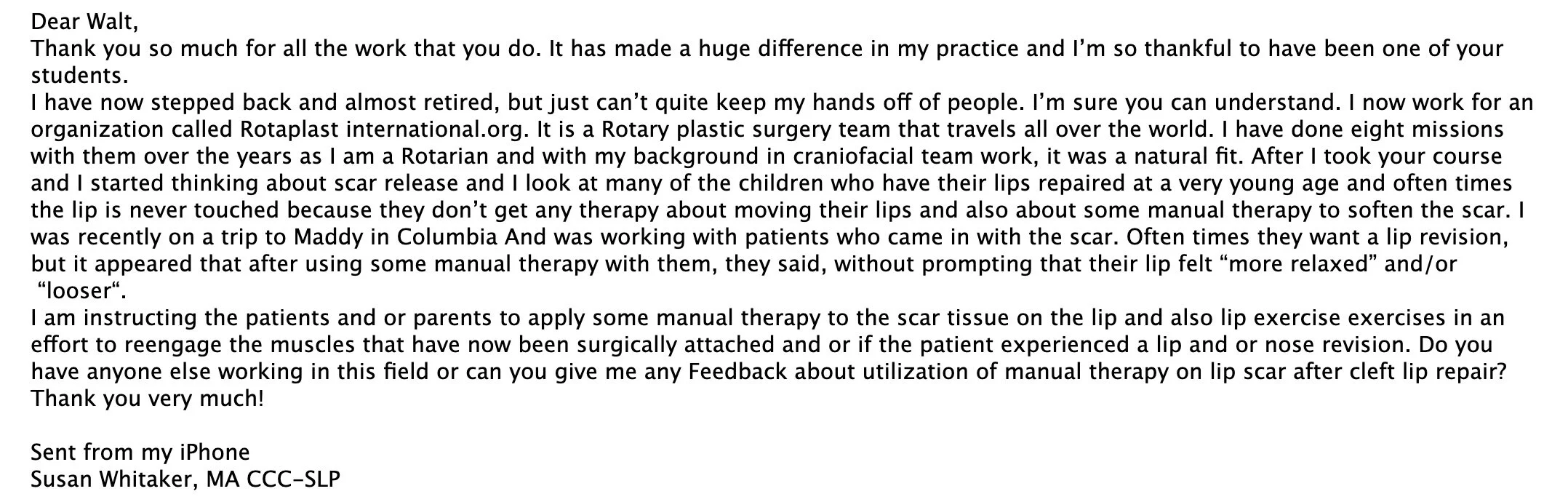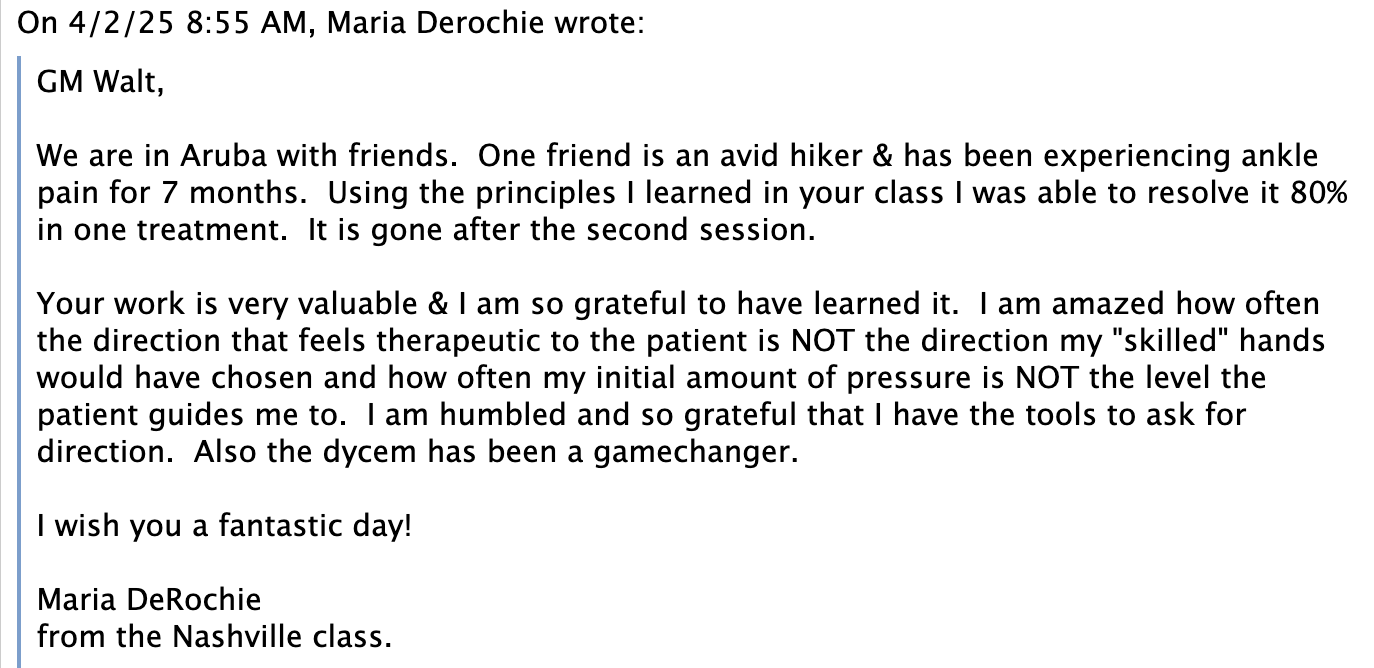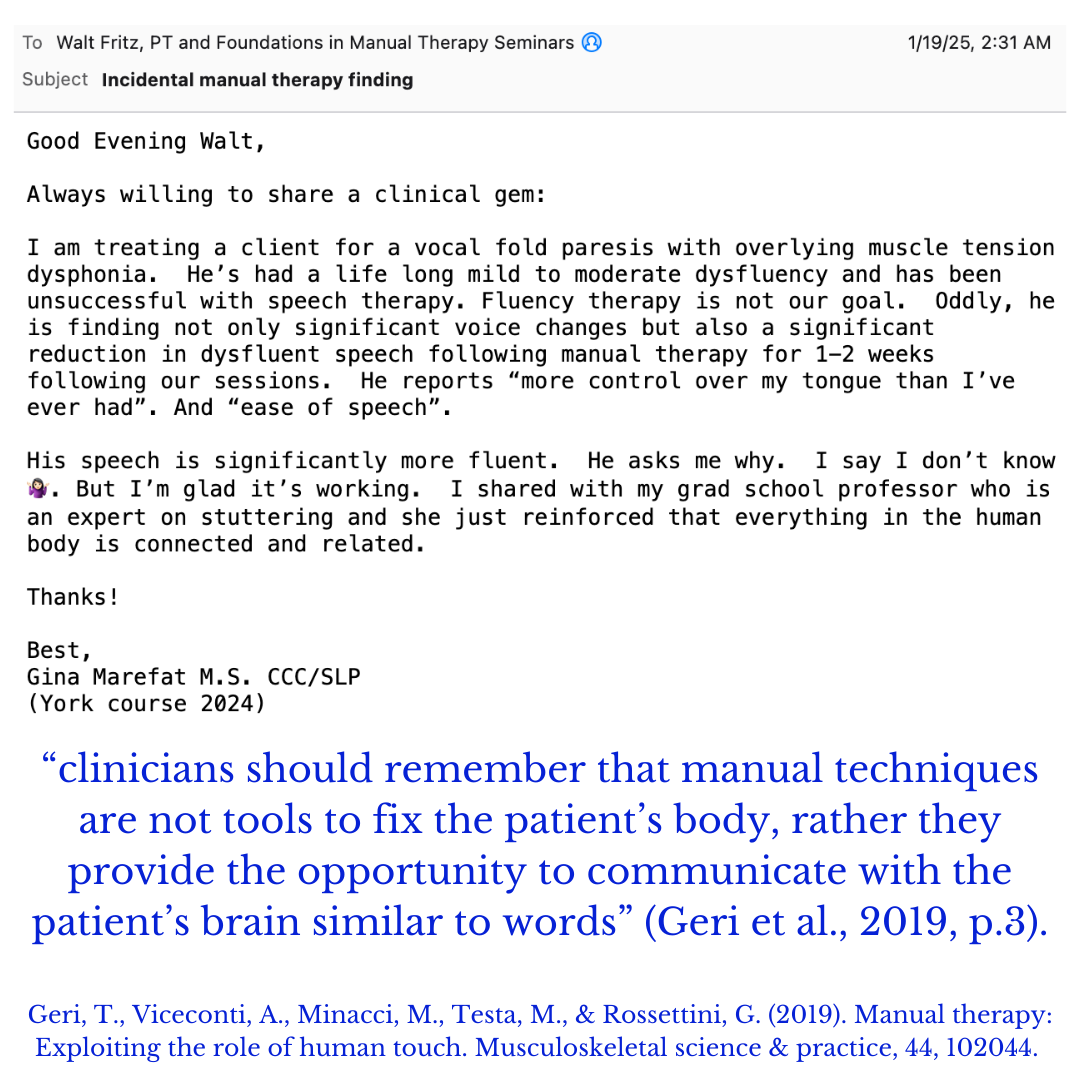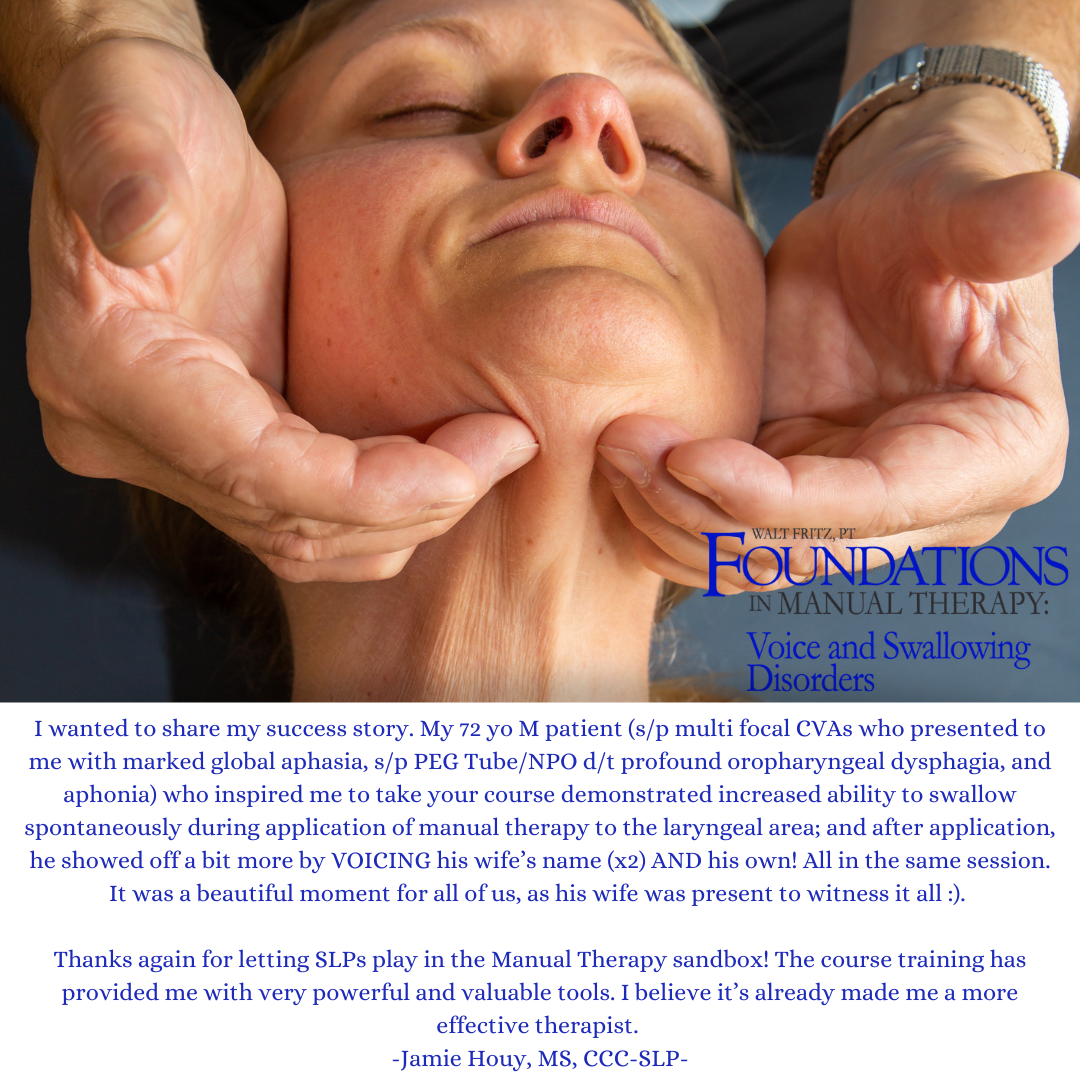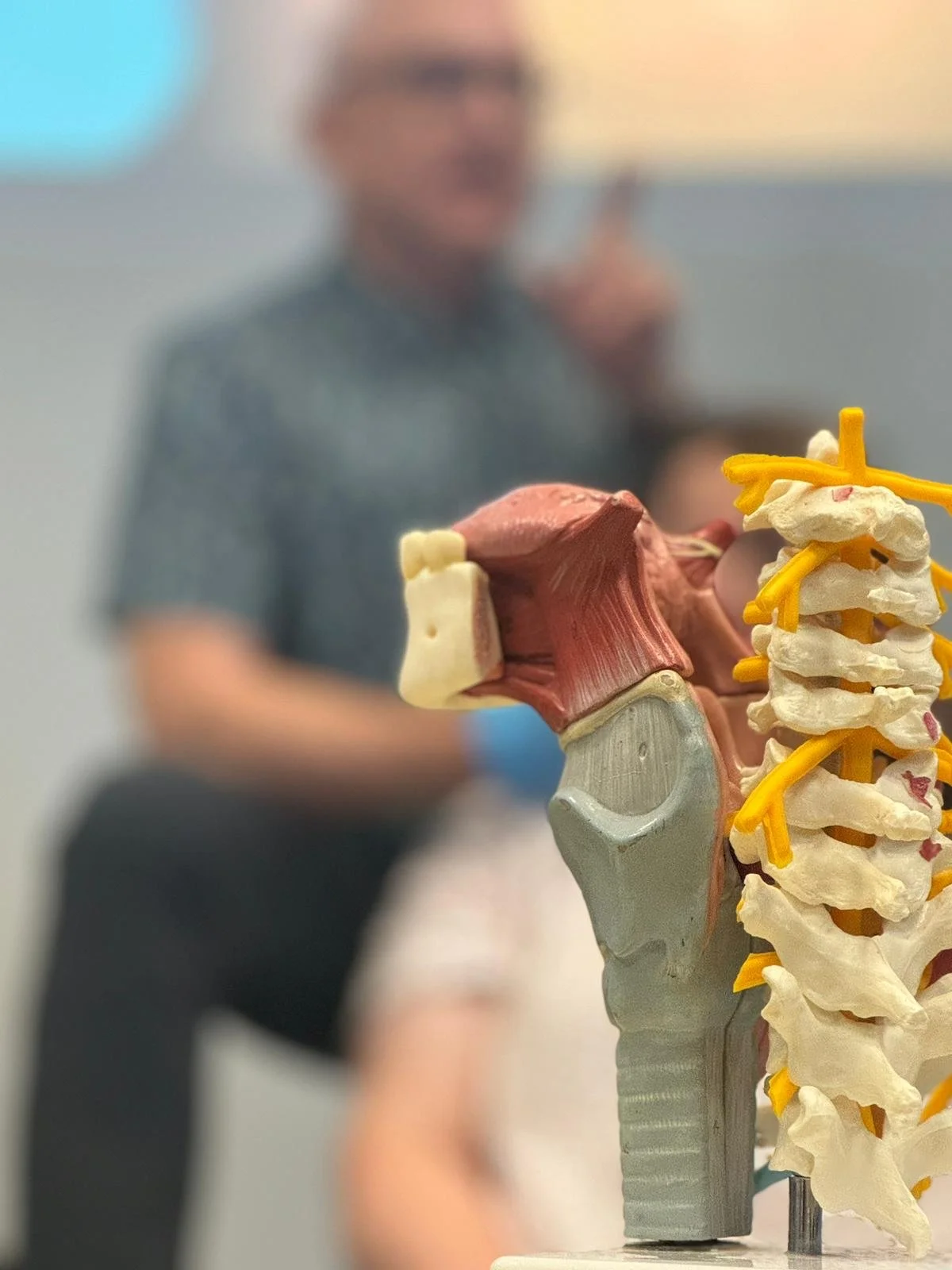
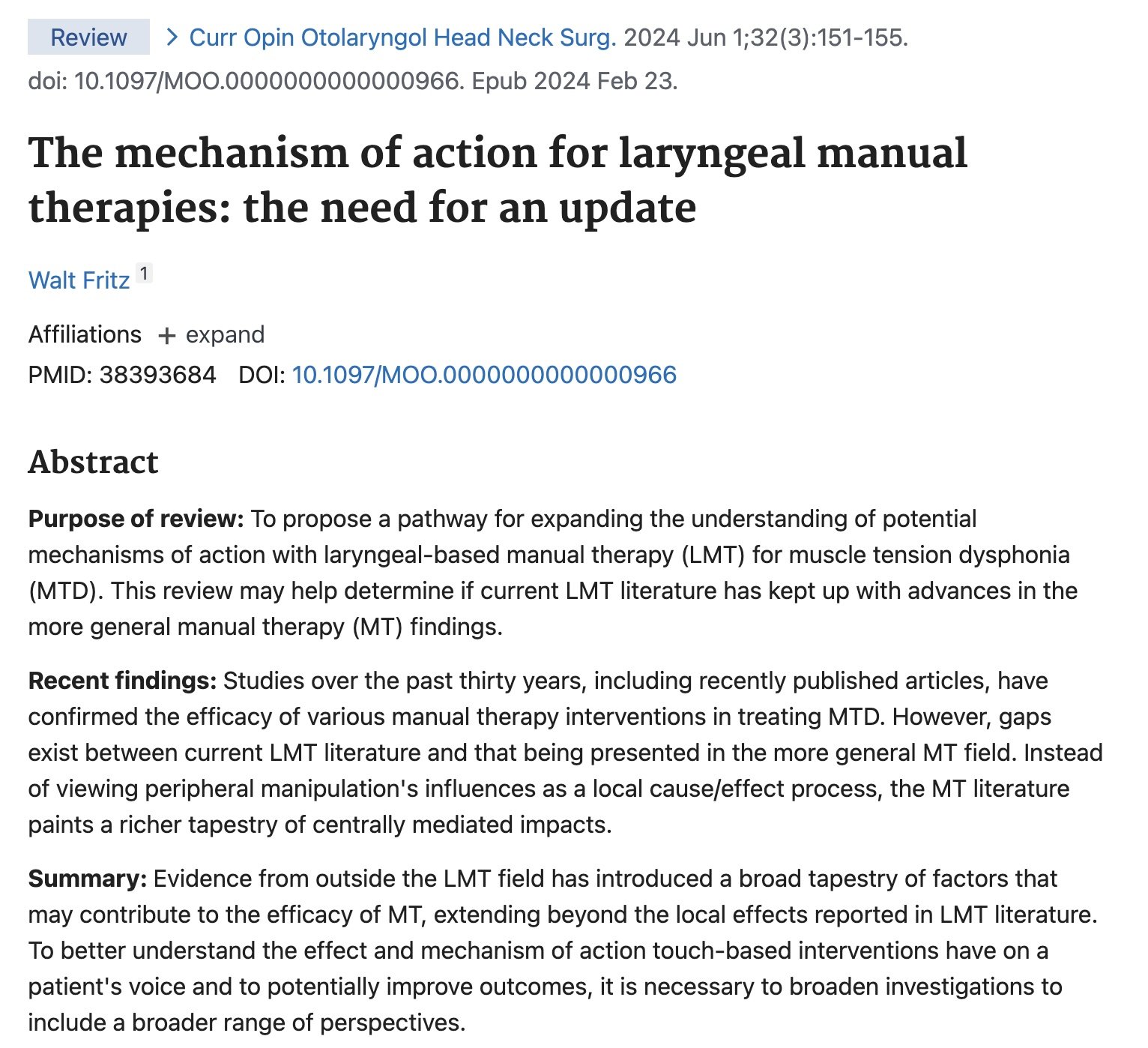
My views on how manual therapy should be applied differ significantly from those of many. My approach was shaped by many years of manual therapy training, which centered on the clinician's mastery but seemed to downplay the potential role our patients can play. Over those decades of training across different models, I was struck by how each modality claimed ownership of a specific tissue or pathology. Yet, all performed similar actions with their hands. My observations led to the creation of this coursework and the publication of the paper shown at left. If you'd like to read a copy to better understand my perspective, give it a read here.
-Walt Fritz
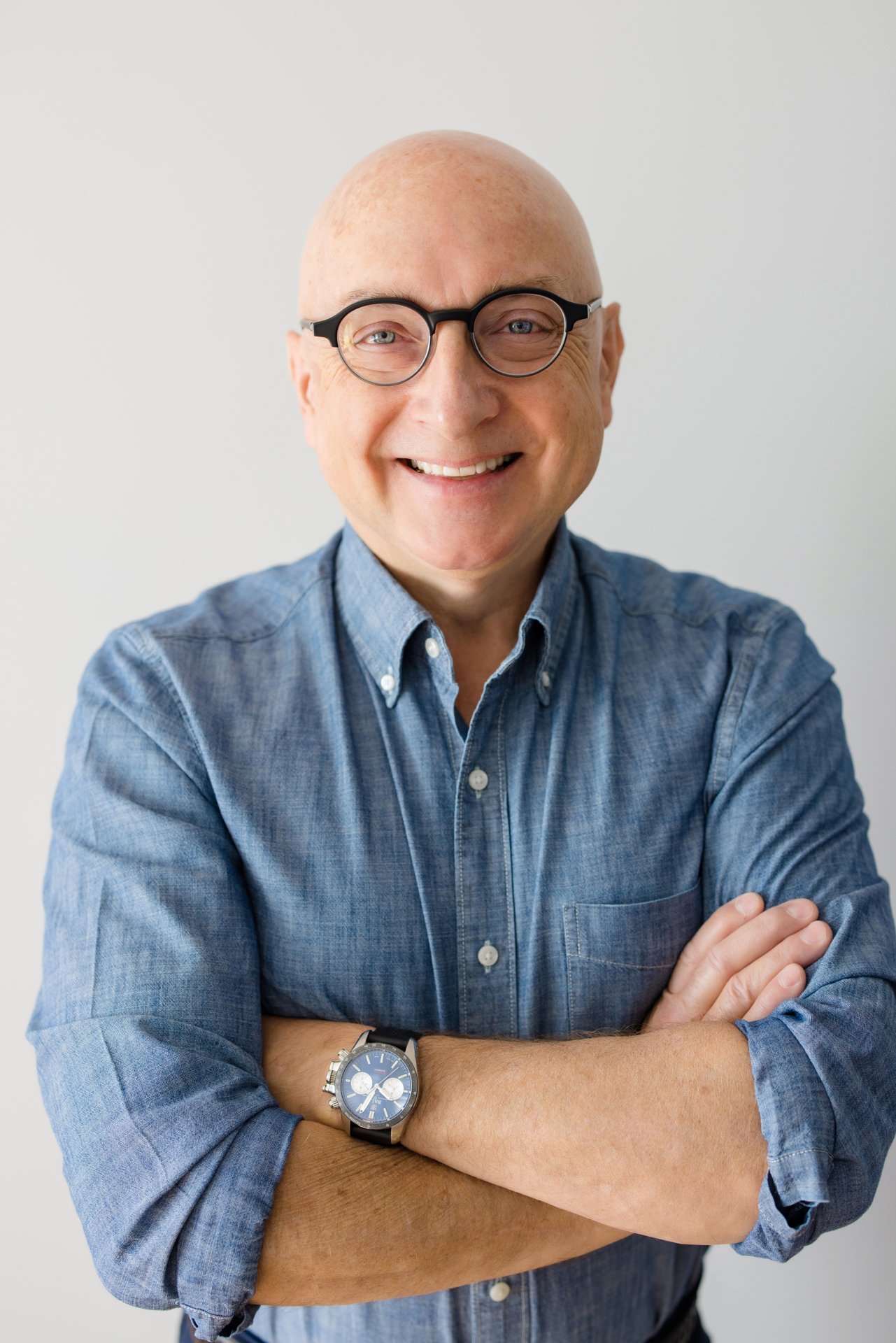
Evidence-based manual therapy and movement education for health, educational, and pedagogical professionals, utilizing a person-centered, shared decision-making approach. In-person and online courses target SLPs, RDHs, PTs, OTs, MTs, and others with aligned interests.
"Clinicians should remember that manual techniques are not tools to fix the patient's body, rather they provide the opportunity to communicate with the patient's brain similar to words.”
Geri, T., Viceconti, A., Minacci, M., Testa, M., & Rossettini, G. (2019). Manual therapy: Exploiting the role of human touch. Musculoskeletal science & practice, 44, 102044.
Please explore the website for in-person and online courses, educational and informational podcasts, videos, articles, and more.
Always feel free to contact Walt Fritz.